
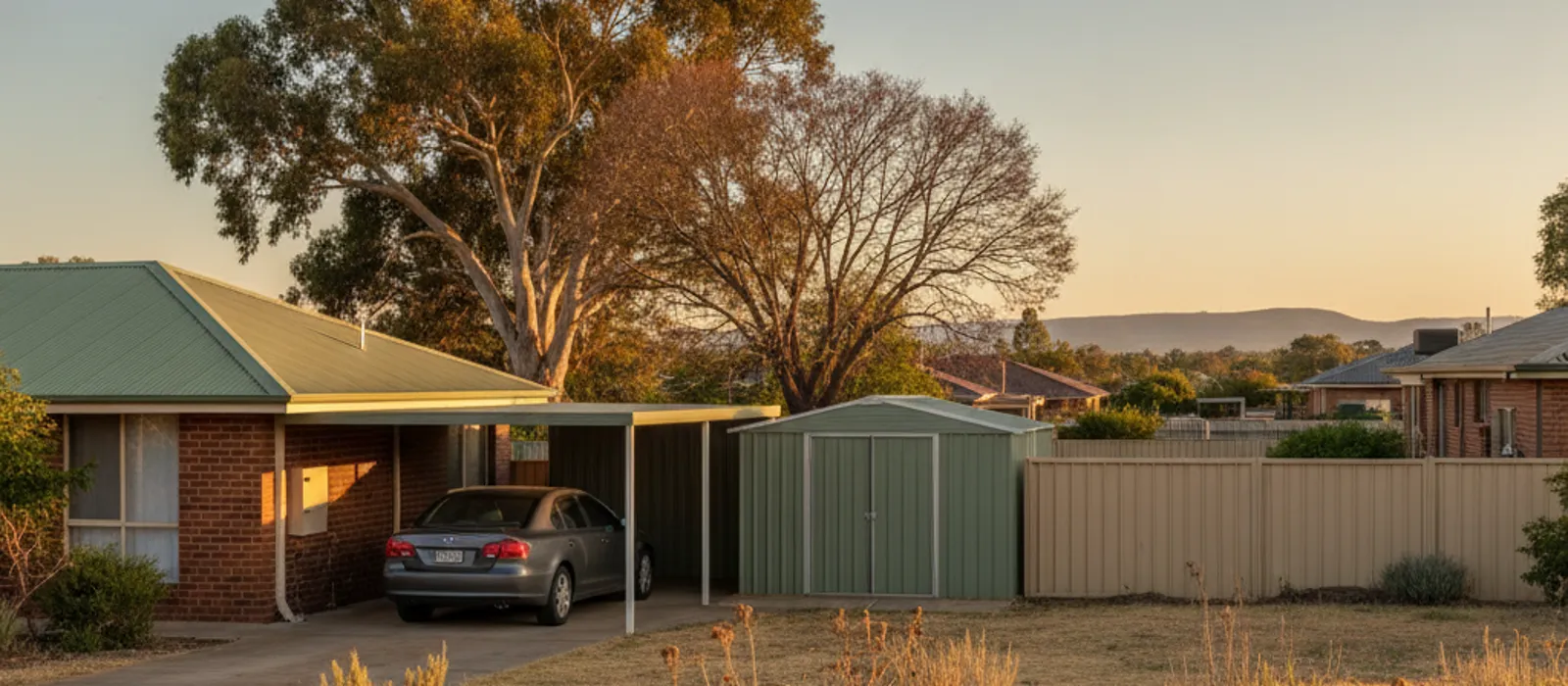
You’ve found the house, the contract’s on the table, and the shed at the back has been there longer than anyone can say. Whether it sits inside the title is a question a property survey can answer before you sign, and a much harder one to answer after settlement. This guide is for Adelaide buyers who want to know what a pre-purchase survey covers, what it can’t tell you and how to get a written quote.
In South Australia the usual type is an identification survey. A Licensed Surveyor looks at the existing boundaries of the land and marks where they judge the boundary to be. It doesn’t tell you whether you can build, divide or extend, and it doesn’t replace a conveyancer reading the title.
If you already know what you want checked, tell us what the survey is for and we’ll pass it to an independent Licensed Surveyor who quotes you in writing and contracts with you directly. Torrens Survey Co is advertising, not a surveying business, and the surveyor who quotes your job is the one you deal with.
Why a property survey before you buy is worth asking about
Fences and buildings are rarely built by someone standing over the title plan. A fence goes up where a previous owner and a neighbour agreed it looked right, a shed goes where the slab was easiest to pour, and years later the block feels like it has always had those edges. The Surveyors Board SA says plainly that major gaps between boundaries and fencing are not uncommon and can be very difficult to fix.
The Board also recommends engaging a Licensed Surveyor when you buy or sell, so you know about any encroachments involving neighbouring properties. It adds that a boundary dispute can turn into expensive litigation, particularly when improvements have to be removed or relocated. You can read the Board’s wording on its public information page.
Buying is the cheapest moment to find out. Before settlement you can still ask questions, negotiate with the seller or walk away. After settlement the shed, the fence and any dispute with the neighbour are yours.
Not every buyer needs one. A shed near the back fence, a wall close to a side boundary or a fence that leans is a good reason to ask.
What an identification survey shows, and what it does not
The Survey Regulations 2020 describe an identification survey as a cadastral survey of existing boundaries of land where a plan is not otherwise required to be lodged. The surveyor has to follow the Code of Practice for lodging boundary identification surveys. Only a Licensed Surveyor, or someone working under their supervision, can carry one out for a fee and place the marks.
What you get is the surveyor’s professional opinion of where the boundary is, marked on the ground, and a record of it. The Surveyor-General’s guidelines say pegs placed on an identification survey represent the surveyor’s opinion of the boundary position and are subject to any errors of survey or judgement. That’s honest, and worth knowing. It’s still the opinion of a person with the training and legal standing to give it, which a tape measure and the neighbour’s memory are not.
The surveyor records the survey publicly by lodging a Plan for Information Purposes. The Land Titles Registration Office does not examine these plans, but they are certified as carried out in line with the Survey Act 1992. Ask whether a copy of that plan is part of what you receive.
Here’s what an identification survey doesn’t do:
- It doesn’t say whether a division, extension or new building will be approved.
- It doesn’t value the property or inspect the house.
- It doesn’t replace the certificate of title, which your conveyancer reads. Our guide to the certificate of title explains what’s on it.
If you’re unsure whether you need this or a fuller boundary survey, the identification surveys page explains how the two relate. Surveyors quote each job, so ask which one they are proposing and why.
Encroachments, easements and sheds: what a property survey can flag
An encroachment is a structure that crosses the legal boundary onto someone else’s land. SA Government guidance says that can include buildings, driveways, eaves and balconies. It can go either way: a neighbour’s structure can sit on your block, or yours on theirs.
Who sorts it out depends on the dispute. SA Government says encroachment disputes go to the Supreme Court, and the Surveyor-General notes that section 4 of the Encroachments Act 1944 lets both the neighbouring owner and the encroaching owner apply to the Land and Valuation Court for relief. Neither is a quick or cheap place to end up, and a conveyancer or lawyer is the person to ask about your options.
An easement is different. It’s a registered right for someone else, often a service provider or a neighbour, to use part of the land. It’s recorded on the title, and its position is generally described in relation to the boundaries. If the boundary is uncertain, the easement position is uncertain too. Our guide to easements on title goes into what they are. Whether a structure can sit on or near one is a question for the easement holder and your conveyancer.
Sheds are where buyers most often get caught. They’re built by owners, often without a survey, and moved or extended over the years. They also tend to sit at the back of a block, next to a fence that may itself be off the line.
Two practical points. The survey is done on the ground, so access matters: fences, vegetation and a neighbour’s side of the boundary can all affect the work. And ask what the quote includes. Boundary marking only and marking plus the offsets from the boundary to the house, shed and fences are different scopes, and can be quoted differently.
Three Adelaide situations where a pre-purchase survey earns its fee
These are anonymised examples of the kind of question that comes up, not case studies. Any figure here is a published one, and none is a quote.
A 1960s brick home on a 900 m2 block in Campbelltown. A buyer sees a large block and starts thinking about splitting it. Before that conversation goes anywhere, they want to know where the boundaries really are and whether the shed and carport sit inside them. The Greater Adelaide Regional Plan 2025 notes that some infill has occurred in Campbelltown City Council, generally as townhouses. Whether this block could be divided is a council and planning question, and the zone and any overlays in the Planning and Design Code decide it.
The costs of a division are published. One Adelaide surveying firm, Sawley Lock O’Callaghan, said on a page modified 12 May 2025 that a standard one-into-two division in metropolitan Adelaide costs in the order of $30,000 to $34,000 all up (GST not stated). That covers state and council fees, Land Services SA plan fees, surveyor and conveyancer fees and SA Water fees, with power and NBN connections extra. For 2026-27 the open space contribution is $10,166.00 per new allotment in Greater Adelaide, and a two-lot division creates one new allotment. An identification survey is a cheap first check compared with numbers like these.
A leaning Colorbond fence in Salisbury. The buyer likes the house, and the seller and the neighbour each say the fence is on their side. Under the Fences Act 1975, a fence built off the line by agreement doesn’t hand either owner title to the strip between them. The Legal Services Commission also says a court is unlikely to order a fence moved when the gap from the boundary is minor.
That cuts both ways. A small deviation may never matter, but you won’t know it’s small until someone marks the line. The Commission adds that if the neighbour doesn’t want a survey, whoever arranges it pays for it. See our guide to the Fences Act and boundary fences.
A bluestone villa in Unley whose side wall sits on the title boundary. A wall right on the boundary raises a plain question: does the wall, the gutter or the eave stay inside the title, or does some of it cross over? SA Government lists eaves among the things that can encroach. The buyer doesn’t need to guess, and doesn’t need to assume it’s a problem. They need someone with the legal standing to mark the line and report where the structure sits against it.
If the answer is awkward, the conveyancer can raise it with the seller while there is still time to act. Talk to a Licensed Surveyor about your block early, because it’s easier to renegotiate before you’re locked in.
What a property survey before you buy costs, and how to compare quotes
Adelaide surveying firms don’t publish prices for these surveys. As at 30 September 2026 no South Australian firm we checked shows a price for boundary or identification surveys, so we won’t print one. Surveyors quote each job, and the price depends on the block, the evidence on site and the survey type.
What does exist is national guidance. These figures aren’t Adelaide prices and should be read that way.
| Source | Survey type | National range | Note |
|---|---|---|---|
| Trade Heroes national cost guide (updated 6 March 2026) | Boundary survey | $900 to $2,500 | GST not stated |
| EastWest Surveyors national guide (16 November 2025) | Boundary or identification | $800 to $2,500 | GST not stated |
| Adelaide and South Australian firms | Boundary or identification | No published price | Ask for a written quote |
The two guides broadly overlap, but they’re generic and wide. An Adelaide surveyor quotes your block, and the number may sit inside, above or below those ranges. Treat the table as context, not a budget.
When quotes arrive, compare what is in them rather than only the total. Ask:
- Is the survey boundary marking only, or does it report where the house, shed and fences sit against the boundary?
- Will a Plan for Information Purposes be lodged, and will you get a copy?
- Does the quote say whether easements from the title will be shown?
- Is GST included?
- What happens if the surveyor can’t get access or finds the evidence is unclear?
Our land survey quote checklist has a longer list, and the Adelaide cost guide sets out what is and is not published.
How to get a quote and check the surveyor’s licence
Start with what the survey is for. “I am buying this house and want to know the shed, fences and house sit inside the title” is a clear brief. So is “the seller’s fence looks off, and I want to know before I sign.” The clearer the reason, the more useful the quote.
Then check the person. In South Australia only licensed surveyors can undertake a boundary survey or place a survey mark that defines a boundary, and the Surveyors Board says surveys by unlicensed practitioners have no legal standing. There is no searchable online register. To check a licence, contact the Registrar at registrar@isasa.org.au or (08) 8212 0343, or read the Gazette list of Licensed and Registered Surveyors, updated each January and July. The Board’s public information page links to it.
If there are survey marks on the block already, leave them alone. SA Government says you can’t move or remove a survey mark made by a licensed surveyor, and disturbing a permanent survey mark carries fines of up to $2,000 each. Permanent marks also don’t mark the boundary corner.
Timing matters when there’s a contract. How long a survey takes is up to the surveyor and the site, so ask at quoting stage, and ask your conveyancer how the contract dates work.
To begin, use the contact form to say what the survey is for and we will pass the request to an independent Licensed Surveyor. If you’d rather talk it through first, call (08) 5550 3814. The surveyor quotes and contracts with you directly.
Frequently Asked Questions
Do I need a property survey before buying a house in Adelaide?
Not every buyer does, but the Surveyors Board SA recommends engaging a Licensed Surveyor when you buy or sell so you know about any encroachments. It matters most when a shed, wall or fence sits close to a boundary, or when the fences look out of line with the title plan.
Can I check the boundary myself with the title plan and a tape measure?
You can get a rough idea, but not an answer. In South Australia only licensed surveyors can undertake a boundary survey or place a survey mark that defines a property boundary. A tape measure from a fence doesn’t have that standing, and the fence itself may be off the line.
Will the survey show easements?
Easements are registered on the title, and your conveyancer reads that. Whether the surveyor’s plan also shows them, and whether it reports the distance from your shed to an easement, depends on what’s agreed. Ask for it to be spelled out in the written quote.
What happens if the survey finds an encroachment?
Take it to your conveyancer before settlement, because your options depend on the contract and the parties. The neighbour and seller may agree a way forward, and the Encroachments Act 1944 lets either owner apply to the Land and Valuation Court for relief. Don’t move or remove any survey marks.