Missing pegs, a fence to build or a neighbour who disagrees about the line. Torrens Survey Co puts Adelaide owners in touch with an independent Licensed Surveyor who quotes the job directly.
A boundary survey in Adelaide is how you find out, properly, where the title says your land starts and stops. A Licensed Surveyor works from your title, looks at the evidence on the ground, re-establishes the boundary corners and places new survey pegs where the old ones have gone. People usually book one before a new fence, during an argument with a neighbour, before building close to the line, or when the pegs have disappeared.
Torrens Survey Co is an advertising and introduction service. It doesn't survey and holds no surveying licence. It puts you in touch with an independent Licensed Surveyor, who quotes and contracts directly with you. Call (08) 5550 3814 and say what you're trying to do, because sometimes the honest first step is working out whether a boundary survey is the right one.
The Surveyors Board of South Australia says only licensed surveyors can undertake a boundary survey or place a survey mark that defines a property boundary. Check the licence before you accept a quote.
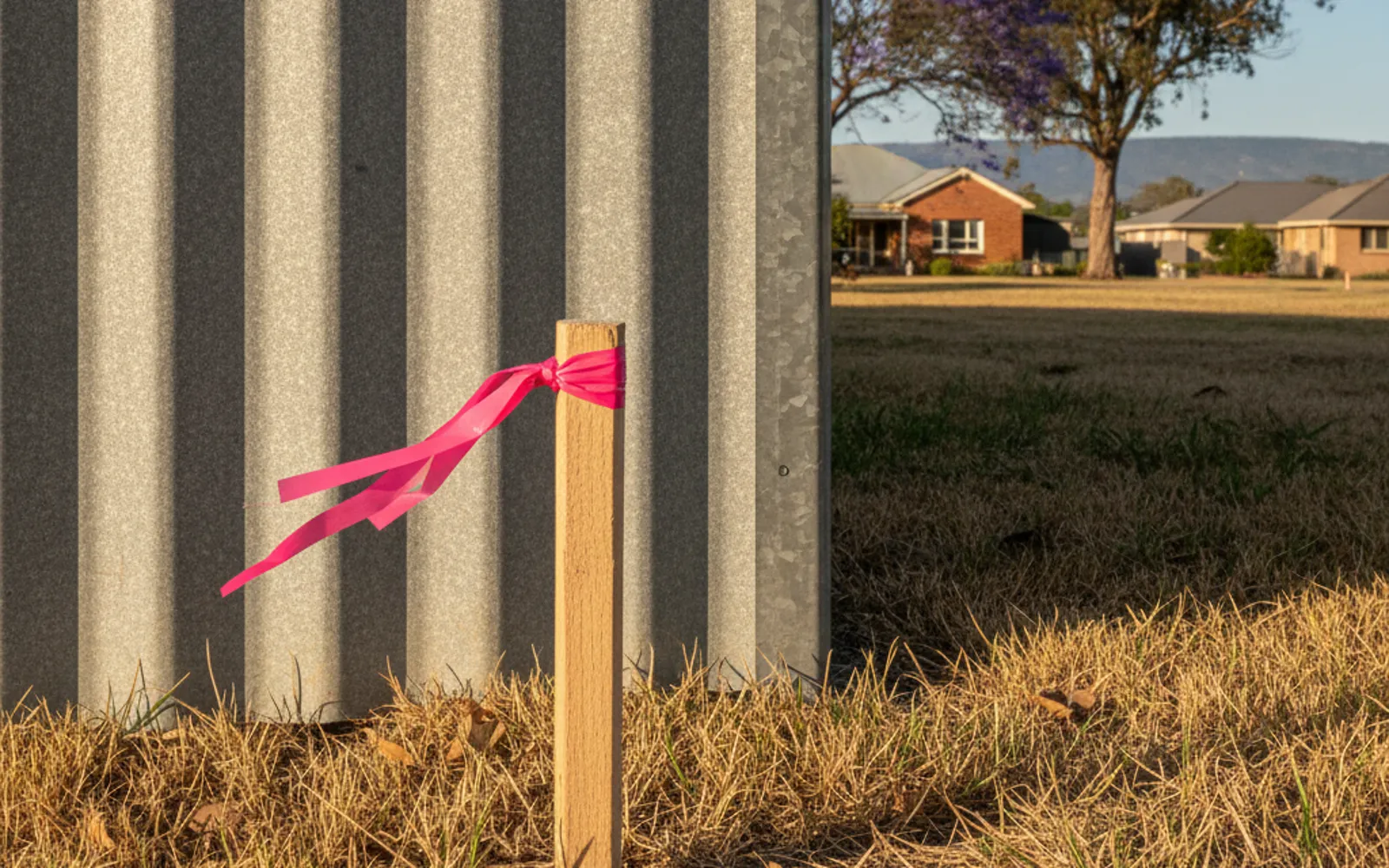
The surveyor re-establishes the boundary corners from your title dimensions and the evidence on site, then places new pegs where the old ones are gone.
Under the Fences Act 1975, the cost of a survey that is reasonably required counts as part of the fencing cost. That matters when you and the neighbour disagree about the line.
A fence line, a title plan or an aerial photo doesn't show the legal boundary. A survey gives both sides a Licensed Surveyor's marks on the ground to look at.
The Surveyors Board advises engaging a Licensed Surveyor to verify your title dimensions and boundary location before you build on or near a boundary.
An identification survey can check the house, shed and fences against the title, so you know about any encroachment before settlement rather than after.
In law this work is a cadastral survey, which the Survey Act 1992 (SA) defines as determining the boundaries of land by measuring distances and angles. When it re-establishes existing boundaries and no plan has to be lodged at the Lands Titles Registration Office, it is called an identification survey. You'll also see it called a re-establishment survey or re-pegging.
The Surveyors Board of South Australia puts it plainly: in South Australia, only licensed surveyors can undertake a boundary survey or place a survey mark that defines a property boundary. Under the Act, carrying out a cadastral survey for fee or reward, or placing a survey mark, without being a licensed surveyor or working under one's supervision is an offence with a fine of up to $8,000.
The pegs are the surveyor's professional opinion of where the boundary is. The Surveyor-General's guidelines note that pegs placed on an identification survey represent the surveyor's opinion of the boundary position and are subject to errors of survey or judgement. That's why the licence matters, and why a fence line or an aerial photo is no substitute.
The starting point is your title and its dimensions. The Surveyors Board describes a Licensed Surveyor's job as verifying your title dimensions and the boundary location, and the surveyor also looks at what's physically on the ground. Tell them what triggered the job (a fence, a neighbour, a build, a purchase), because that shapes the scope.
What you get is the pegs, placed by or under the supervision of the Licensed Surveyor, so a fencing contractor or builder has something physical to work to. Under the Lodgement of Boundary Identification Surveys Code, surveyors record their identification surveys by lodging a Plan for Information Purposes. The Land Titles Registration Office doesn't examine it, but it's certified as carried out in accord with the Survey Act 1992. Ask each surveyor exactly what paperwork comes with the quote.
Survey marks are protected. By law you can't move or remove one, and doing so can bring legal action and fines. The Act also lets a surveyor enter land and, to the extent necessary, excavate or break the surface to uncover or place a survey mark, so ask what access and disturbance the job involves.
Under the Fences Act 1975 (SA), an owner who wants a new dividing fence serves a notice of intention on the neighbour. It states the length, position and nature of the fence, an estimate of the cost and the share the owner wants the neighbour to pay. The neighbour has 30 days to serve a cross-notice, and no reason is needed to object. A neighbour who doesn't object in time is taken to have agreed.
The Act counts the cost of any survey reasonably required for the fencing work as part of the fencing cost. The Legal Services Commission adds that a neighbour may object to paying for a survey they think is unnecessary, and if it reaches court a Magistrate decides whether it was reasonably required. If you both want the survey you can agree to share the cost; if not, the person who arranges it pays.
If you still can't agree on the line, the Magistrates Court can decide the line of the fence and can order removal of a fence not built on the proper boundary. The Legal Services Commission notes a court is unlikely to order a fence moved when it is only slightly off the boundary. This is general information, not legal advice. For a dispute, talk to the Legal Services Commission, Community Mediation Services or a solicitor.
Adelaide surveyors quote each job, and none of the Adelaide firms we checked publishes a dollar figure for a boundary survey. The price depends on the block, the evidence on site and the survey type. National cost guides from Trade Heroes and EastWest Surveyors put boundary survey at roughly $900 to $2,500 across Australia. That's not an Adelaide price, and neither guide is a market survey, so treat it as a rough outer range and see the cost page for more.
Before you agree to anything, check the licence. The Board says to confirm the firm uses a surveyor licensed in South Australia. The Registrar can confirm it by email at registrar@isasa.org.au or on (08) 8212 0343, and the Board's lists of Licensed and Registered Surveyors are published in the South Australian Government Gazette each July and January. Registered Surveyors work in other areas, so for boundary work you want a licensed one.
When you get quotes, ask each surveyor:
No Adelaide firm we checked publishes a price, so there's no honest Adelaide figure to quote. National cost guides put boundary survey at roughly $900 to $2,500 across Australia, but that's not an Adelaide price. Ask the Licensed Surveyor for a written quote and whether it includes or excludes GST.
Under the Fences Act 1975 a neighbour has 30 days from service of the notice to serve a cross-notice, and they don't need to give a reason. If they don't object in that time, they're taken to have agreed. You can't start work until the 30 days have passed or you have written consent.
That's a question for the Licensed Surveyor and a solicitor, not this site. The Legal Services Commission notes a court is unlikely to order a fence moved if the deviation is minor, but the Magistrates Court can decide the line and order removal of a fence not on the proper boundary. Encroachment disputes go to the Supreme Court.
No. SA Government says that by law you cannot move or remove a survey mark, and doing so can lead to legal action and fines. Permanent survey marks carry fines of up to $2,000 each if they are disturbed. If a mark is in the way of your works, talk to the Licensed Surveyor first.
Email the Registrar at registrar@isasa.org.au or phone (08) 8212 0343, or check the Licensed and Registered Surveyors list in the South Australian Government Gazette. The Board updates it each July and again in January. The Board has the power to investigate and prosecute unauthorised people who do boundary surveys, and the Act sets a fine of up to $8,000.
Tell us what the survey is for and get a written quote.