
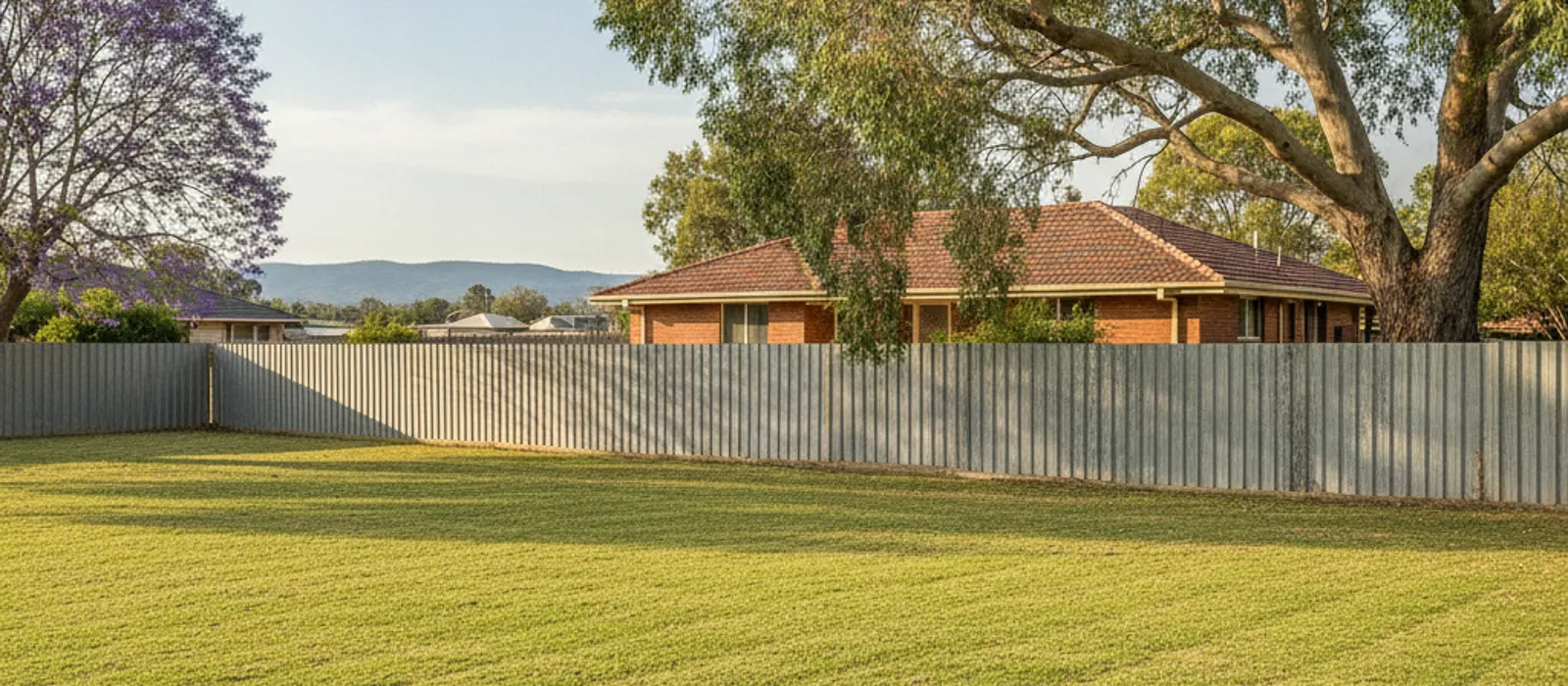
Your designer wants the boundary dimensions, your neighbour wants a new fence, and you’ve been walking the side path for twenty minutes without finding a single peg. With survey pegs missing, everyone is guessing, and a guess about a boundary can cost you a fence, a wall or a sale.
This article covers what missing pegs mean, what a Licensed Surveyor does to put them back, and how to get a quote without paying for the wrong thing. It’s general information, not legal advice.
Why survey pegs go missing (and why it usually isn’t a crisis)
Pegs have a hard life. They get dug up when a driveway is replaced, buried under paving, knocked out by a fencing crew, or covered by decades of garden.
Missing pegs don’t mean the boundary has moved. The boundary is defined by the title and the registered plan, not by the pegs. The pegs are physical evidence of where a surveyor once measured it to be.
That distinction stops two bad ideas early. One is “the pegs are gone, so nobody can say where the line is.” A surveyor can work it out again. The other is “the fence has been there for years, so that must be the line.” SA Government is blunt on this one: a property boundary’s position “can only be determined by a licensed surveyor.” A fence, a title plan or an aerial photo doesn’t settle it.
Missing pegs become a problem when something is about to be built, bought or argued over.
Survey pegs missing: what you can and can’t do yourself
You can look. Check along the fence lines, at the corners and near the kerb for small marks, and read your certificate of title and its plan. That’s a sensible first step before you ring anyone.
Here’s what you can’t do. You can’t hammer in your own replacement pegs and treat them as the boundary. Under the Survey Act 1992 (SA), only a licensed surveyor, or someone working under their supervision, may place a survey mark. The Surveyors Board SA puts it plainly: “In South Australia, only licensed surveyors can undertake a boundary survey or place a survey mark that defines a property boundary.”
The Board also says surveys done by unlicensed practitioners “do not have any legal standing and may compromise the future development of your property.”
If you do find a peg, leave it alone. By law, you can’t move or remove a survey mark made by a licensed surveyor, and doing so can bring legal action and fines. Take a photo, note where it is, and tell the surveyor. It’s useful evidence, and it stays put.
A brass plug in the footpath is not your boundary corner
Permanent survey marks (PSMs) are a different thing. They are reference points in footpaths, kerbs and roads, and SA Government says they “do not mark the boundary corner.” They must not be disturbed without the Surveyor-General’s approval, with fines of up to $2,000 per PSM. See the SA Government page on permanent survey marks.
How a Licensed Surveyor re-pegs a boundary
The technical name is usually a boundary identification survey, sometimes called re-establishment. Under the Survey Regulations 2020, an identification survey is a cadastral survey of existing boundaries where no plan is otherwise required to be lodged. Our pages on identification surveys and boundary surveys cover the basics.
The exact sequence varies from block to block, and a surveyor will tell you what your site needs. Roughly, it goes like this.
- The surveyor reads the title and the registered plan for your block and for the neighbours.
- They look for surviving evidence on the ground: old marks on your block, marks on adjoining blocks, and other features that tie back to the plan.
- They measure between those points and work out where the boundary corners sit.
- They place new marks at the corners.
- They record the survey publicly. Under the Code the Board prepared, identification surveys are recorded by lodging a Plan for Information Purposes.
The surveyor may need to come onto your land, and sometimes your neighbour’s. The Act lets a surveyor enter land at a reasonable time and take the action needed to carry out the survey, including breaking the surface to the extent necessary to uncover or place a mark. Expect them to want access along the fence lines, so tell your neighbour before the day, not after it.
This is a job for a Licensed Surveyor with proper instruments. There’s no DIY version.
What new pegs mean, and what they don’t
The Surveyor-General’s guidelines say pegs placed on an identification survey “simply represent the surveyor’s opinion as to the position of the boundary and are subject to any errors of survey or judgement which the surveyor may commit.” It’s a professional opinion backed by measurement, which is why you check the person you hire.
You can check any surveyor’s licence by emailing the Registrar at registrar@isasa.org.au or calling (08) 8212 0343. The Board also publishes the list of Licensed and Registered Surveyors in the Government Gazette every July and January. There’s no searchable online register, so ask the surveyor for their name and check it. The Surveyors Board SA public information page explains how.
What evidence on your block is worth
People often ask whether they can skip the re-peg because they already have something that looks like an answer. This table shows what each piece can and can’t tell you.
| What you have | What it can tell you | What it can’t tell you |
|---|---|---|
| Existing fence | Where a previous owner or neighbour put a fence | Where the legal boundary is. A fence built off the line by agreement doesn’t give either owner title by adverse possession (Fences Act s 17) |
| Certificate of title and plan | The registered dimensions and the shape of the block | Where those dimensions land on the ground today |
| Aerial photo or online mapping | A rough picture of the block and its buildings | The boundary position. SA Government says only a licensed surveyor can determine it |
| An old peg you’ve found | Useful evidence for the surveyor, and a starting point | Whether it is still in its original position. Don’t move it, and don’t rely on it alone |
| A permanent survey mark | A reference point near your street | The boundary corner. PSMs don’t mark it |
| New pegs from a Licensed Surveyor | The surveyor’s professional opinion of the boundary position, recorded on a Plan for Information Purposes | Absolute certainty. Pegs are subject to any errors of survey or judgement |
The bottom row is the only one you can build against with confidence. The rest are inputs to it.
Three blocks where the pegs went missing
These are anonymised scenarios of the kind owners bring to a surveyor. They are not real clients, and they don’t tell you where any boundary sits.
A leaning Colorbond fence in Salisbury. Two neighbours each believe the old fence sits on their side. The original pegs disappeared years ago when one driveway was resurfaced. Before either serves a Fences Act notice, they get a boundary survey.
Under the Act, the cost of a survey “reasonably required for the purposes of the fencing work” counts as a fencing cost, but the Legal Services Commission notes that if the neighbours can’t agree, the person who arranges the survey pays for it. The national cost guide from Trade Heroes puts boundary surveys at $900 to $2,500, GST not stated, and that’s not an Adelaide price. A surveyor quotes the block.
Our article on boundary fence disputes and surveys walks through the notice process and the 30-day clock.
A bluestone villa in Unley, side wall on the title boundary. The owners want to extend, and the designer needs boundary offsets and existing levels for the site plan. The wall looks like it sits on the line, but that’s not a measurement, and the pegs are gone.
A development application needs a site plan, drawn to scale, showing the boundaries and dimensions of the site and existing ground levels. The regulation doesn’t say who prepares it. A feature and level survey is the usual way to get levels and boundary offsets, and the Board recommends a Licensed Surveyor when building on or near a boundary. Ask whether the boundary work and the level work are quoted together or separately. Our page on feature and level surveys explains that survey.
A 1960s brick home on a 900 m2 block in Campbelltown. The owners are thinking about splitting the block and can’t find any pegs. This is where it pays to be clear about what a re-peg is. It’s not the land division. A standard one-into-two division in the Adelaide metropolitan area costs “in the order of $30,000 - $34,000” according to Sawley Lock O’Callaghan, an Adelaide surveying firm (page modified 12 May 2025, GST not stated).
That figure includes government fees, plan fees, surveyor and conveyancer fees and SA Water charges, and the firm warns that SA Water non-standard costs “could increase the costs significantly.”
Separately, the open space contribution is $10,166 per new allotment in Greater Adelaide for 2026-27, and a two-lot Torrens division creates one new allotment. The Commission “may” require it. Whether a division is allowed depends on the zone and the council, so ask PlanSA or the council. Whether a re-peg comes first or is folded into the division survey is a question for the surveyor.
What to ask for before you get a re-peg quote
Adelaide surveyors don’t publish prices for identification or boundary work. Every firm page we checked says to ask for a quote. The price depends on the block, the evidence that survives on site and the type of survey, so a block with clear marks on three corners is a different job from one where the fence has been rebuilt twice.
So give the surveyor what they need to quote. Send your certificate of title if you have it. Say what the survey is for, whether a fence, an extension, a purchase or a possible division.
Mention anything that changes access, such as a locked side gate, a dog or a shed against the boundary. If the reason is a dispute, say so at the start.
Ask for the quote in writing. Ask what it covers, whether GST is included, and whether new pegs and the recorded plan are part of it. Ask the surveyor to confirm they’re licensed and check the name with the Registrar. Our land survey quote checklist has a longer list of questions.
We don’t survey, peg or lodge anything. What we do is put you in touch with an independent Licensed Surveyor, who quotes and contracts with you directly. Tell us what the survey is for and get a written quote, or call (08) 5550 3814 if you’d rather talk it through.
If you are buying with the pegs missing
If you’re buying, missing pegs are worth taking seriously. The Board recommends engaging a Licensed Surveyor when buying or selling, so you know about any encroachments. It also warns that major discrepancies between boundaries and fencing “are not uncommon and can sometimes be very difficult to rectify.”
An encroachment is a structure that crosses the legal boundary. It can include buildings, driveways, eaves and balconies. Disputes about encroachments go to the Supreme Court, and fencing disputes go to the Magistrates Court. Your conveyancer can tell you what the contract and title say, but the position on the ground is a surveyor’s question.
Raise it early, because a purchase has a clock. Ask the surveyor whether they can quote for your timeframe, and don’t assume the answer.
Frequently Asked Questions
Do missing survey pegs mean my boundary has moved?
No. The boundary is defined by the title and registered plan, and pegs are physical evidence of where a surveyor once measured it. When pegs go missing, a Licensed Surveyor can work out the boundary position again and place new marks. What the survey finds is a matter for the surveyor.
Can I replace missing boundary pegs myself?
No. In South Australia, only licensed surveyors, or people working under their supervision, can place a survey mark that defines a property boundary. Surveys by unlicensed practitioners don’t have legal standing. If you find an existing mark, don’t move or remove it.
How much does it cost to re-peg a boundary in Adelaide?
Adelaide surveyors quote each job, and none of the firm pages we checked publish a price for this work. National guides such as Trade Heroes put boundary surveys at $900 to $2,500, GST not stated, but that’s not an Adelaide price. A Licensed Surveyor quotes it after seeing the title and the block.
Who checks that a surveyor is licensed?
The Surveyors Board SA keeps the register. You can email registrar@isasa.org.au or call (08) 8212 0343, and the Gazette list of Licensed and Registered Surveyors is updated each July and January. There’s no searchable online register, so ask the surveyor for their name and check it before you sign.